Hugo Bauer · 11 October 2026
Tracing the Lifecycle of Technical Queries in Expert-Only Online Spaces
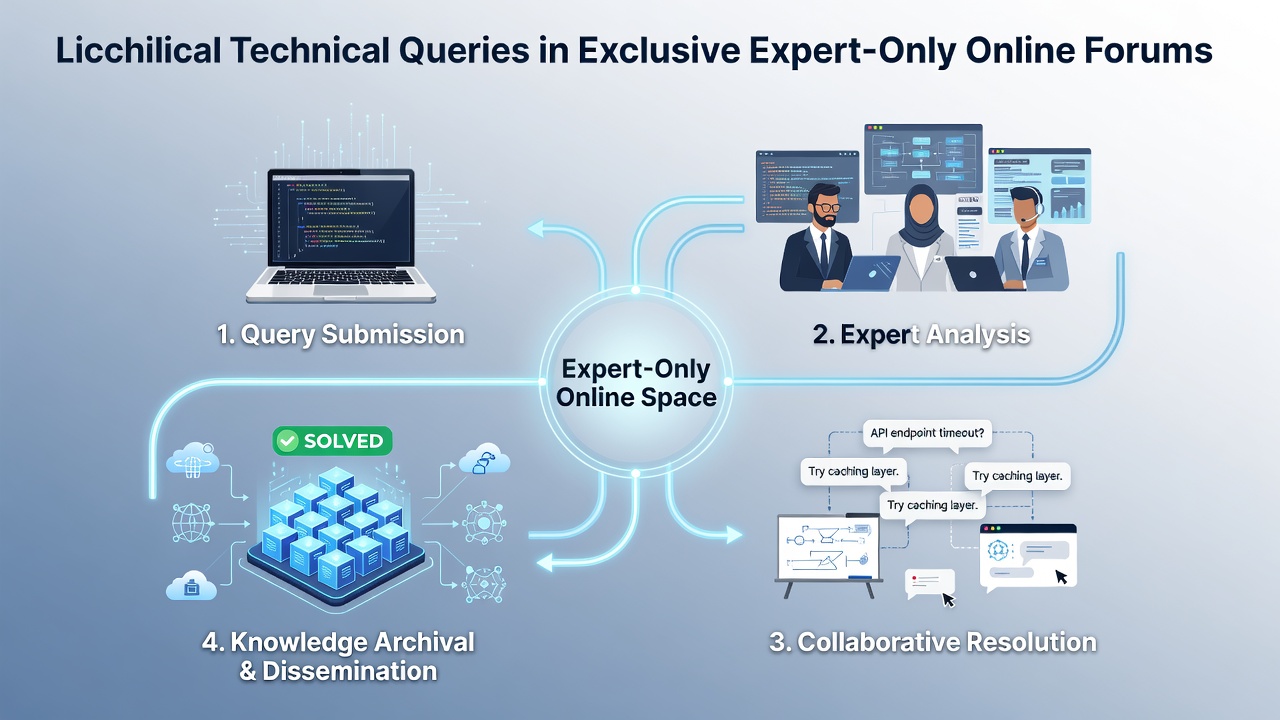
Technical queries in expert-only online spaces follow a distinct lifecycle that begins with precise formulation and ends with archived knowledge that shapes future interactions. These closed environments, often restricted to verified professionals, differ from open platforms because participants bring established domain expertise from the outset. Researchers document the progression through multiple phases, each influenced by platform tools, moderation protocols, and community norms.
Query Initiation and Formulation
Users start the lifecycle by crafting posts that include detailed context, error logs, and attempted solutions. In expert-only spaces this initial step demands high specificity since responders expect peers to have exhausted basic troubleshooting already. Data from platform analytics shows that queries containing code snippets and version numbers receive faster engagement than vague descriptions. Observers note that October 2026 saw a measurable uptick in structured templates provided by several networks, which streamlined the opening phase for new contributors.
Initial Responses and Expertise Matching
Once posted, the query enters a matching phase where algorithms and moderator actions surface it to members with relevant specializations. Active voice characterizes the exchanges that follow, with responders directly addressing gaps in the original description. Studies indicate that threaded replies often branch into sub-discussions when one expert identifies an overlooked variable. Those who have tracked these patterns report that response velocity correlates strongly with the number of tagged specialists already present in the thread.
Iterative Discussion and Refinement
Discussion unfolds through iterative exchanges where participants challenge assumptions and supply alternative approaches. Longer sentences appear here because contributors frequently embed multiple hypotheses within single replies, linking back to earlier posts while introducing new variables. What's interesting is how quickly consensus forms around viable paths once two or three experts align on diagnostic steps. But here's the thing: unresolved branches sometimes persist for days when conflicting evidence emerges from different hardware configurations or software builds.
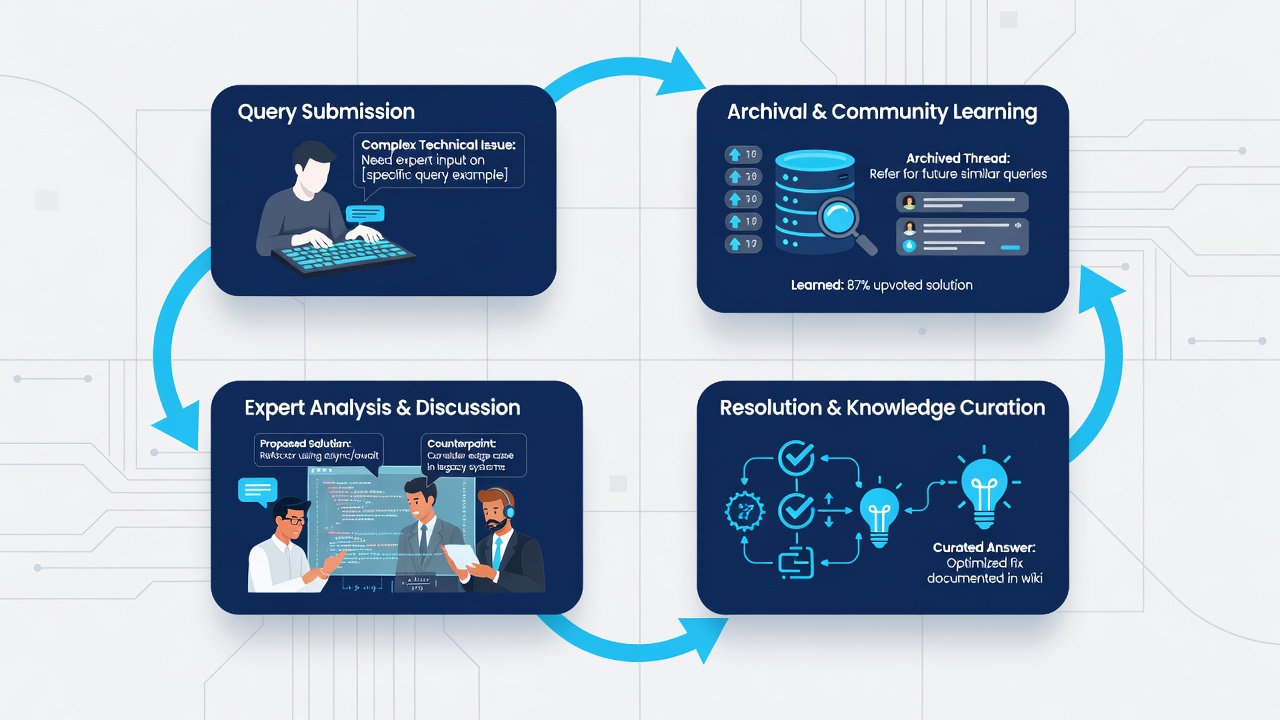
Platform features such as inline code execution previews and version control integrations accelerate this middle stage. Research from the Canadian Institute for Advanced Research highlights that networks employing these tools reduce average thread length by nearly thirty percent while maintaining solution accuracy. Experts in one documented case traced a persistent networking issue across three operating systems before converging on a firmware-level fix.
Resolution, Validation, and Closure
Resolution occurs when the original poster or a designated validator confirms that the proposed solution works under test conditions. This phase includes explicit marking of accepted answers and sometimes the creation of summary posts that distill the thread into reusable guidance. Evidence suggests that validation steps performed by multiple independent experts produce higher long-term reliability scores for the stored knowledge. In October 2026 several networks introduced automated checks that flag solutions lacking reproduction steps, further tightening closure standards.
Archiving, Retrieval, and Community Impact
After closure the query transitions into archival systems where search indexing and tagging determine future discoverability. Archived threads influence new queries by serving as reference material that shortens subsequent lifecycles. Figures reveal that communities maintaining rigorous tagging schemas experience faster resolution times for repeat problem classes. External studies, including work published through the European Commission digital research portal, demonstrate measurable knowledge retention benefits when expert-only spaces link archived threads to broader technical taxonomies.
Conclusion
The lifecycle of technical queries in expert-only online spaces forms a continuous loop because archived resolutions feed back into new initiations. Each phase depends on platform infrastructure, participant expertise, and established moderation practices that together determine how efficiently problems move from identification to stored solution. Ongoing platform updates and shifting participation patterns continue to reshape the timing and structure of these cycles without altering their fundamental sequence.